
If your cat suffers from persistent itching, digestive problems, or unexplained vomiting, your veterinarian may mention hydrolysed cat food (HCF) as a possible solution. For many owners, this raises important questions: What exactly is hydrolysed cat food? Is it safe? And how do I know if my cat really needs it?
In this article, we’ll explain how hydrolysed cat food works, when it’s recommended, and whether it’s the right choice for your cat.
What Is Hydrolysed Cat Food?
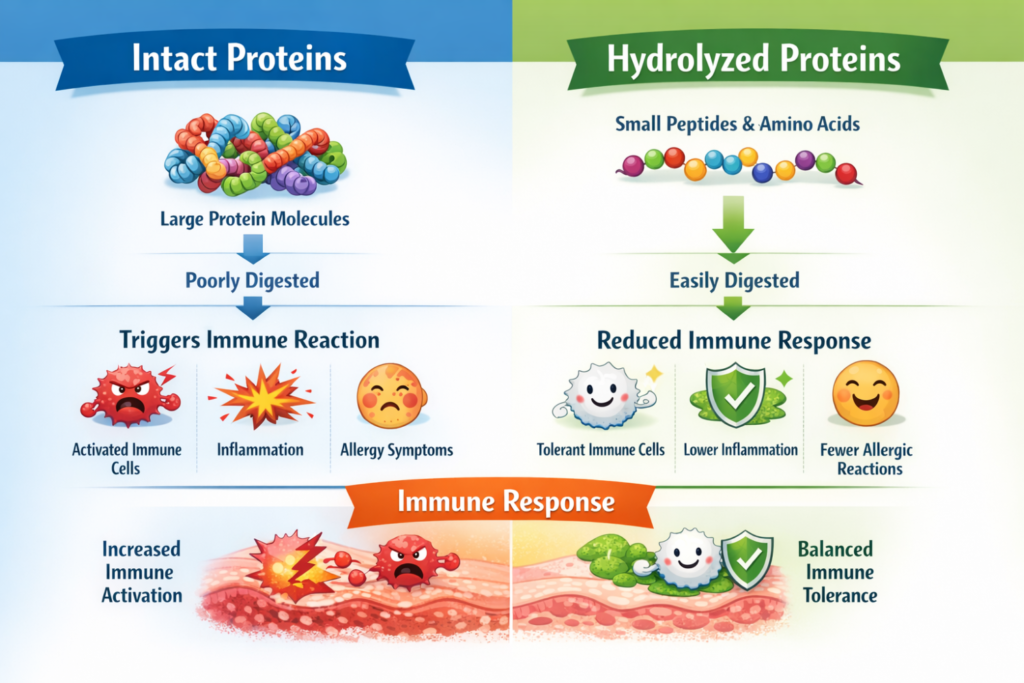
HCF uses specially formulated protein that enzymes break down into very small fragments through a process called hydrolysis. These protein fragments (called peptides) are so small that a cat’s immune system is far less likely to recognise them as allergens.
Intact proteins such as chicken, beef, or fish trigger most negative food reactions in cats. By breaking these proteins down into tiny components, hydrolysed cat food helps reduce the risk of an allergic reaction.
Key characteristics of hydrolysed cat food:
- Proteins are pre‑broken down into small peptides
- Designed to be hypoallergenic
- Typically available as a veterinary or pet food expert recommended option
- Some diets are nutritionally complete for long‑term feeding, others are only suitable for short-term use. Consult your vet or local pet food expert for more advice.
Why Would a Cat Need Hydrolysed Cat Food?
HCF does not suit every feline, and vets usually recommend it when they suspect a dietary sensitivity or food allergy.
Common reasons you may be recommended a hydrolysed cat food include:
1. Food Allergies
Food allergies in cats often present as:
- Persistent itching (especially head, neck, and ears)
- Hair loss or scabs
- Recurrent ear infections
Hydrolysing removes whole proteins that trigger these reactions, making it an effective choice for managing food allergies.
2. Digestive Disorders
Some cats experience chronic vomiting, diarrhoea, or soft stools. HCF is highly digestible and often used for:
- Chronic gastrointestinal upset
- Suspected food intolerances
3. Inflammatory Bowel Disease (IBD)
For cats diagnosed with IBD, dietary management is often essential. Hydrolysed cat food can help reduce immune stimulation in the gut, easing inflammation and improving nutrient absorption.
How Does Hydrolysed Cat Food Work?
A typical allergic reaction occurs when a cat’s immune system recognises a protein as a threat and launches a response. Hydrolysing works by “hiding” the protein from the immune system.
Because the protein fragments are extremely small:
- They are less likely to trigger immune cells
- They pass through the digestive tract more easily
- The likelihood of allergic symptoms is reduced
You can think of hydrolysing as “pre‑digesting” the protein before it is eaten.

Benefits of Feeding Hydrolysed Cat Food
When required, HCF can offer several important benefits:
✔ Reduced Allergic Reactions
Cats with food allergies often experience noticeable relief within weeks of starting a hydrolysed diet.
✔ Improved Digestive Comfort
The easy‑to‑digest proteins can help reduce vomiting, diarrhoea, and gas.
✔ Healthier Skin and Coat
As allergic inflammation decreases, many cats show improvements in skin condition and coat quality.
✔ Nutritionally Complete
High‑quality formulations meet all of a cat’s nutritional requirements when fed long‑term. However, it is worth nothing that not all hydrolysed diets are suitable for long term feeding. Check with you Vet or local pet food expert for more advice and guidance.
Are There Any Downsides to Hydrolysed Cat Food?
While hydrolysed cat food can be life‑changing in the right situations, there are a few considerations to keep in mind:
Cost
It is typically more expensive than standard diets due to specialised manufacturing processes.
Palatability
Some cats are hesitant at first because hydrolysed diets can smell and taste different. Gradual transitions usually help. But not all hydrolysed foods are equal. Those made using higher quality protein will offer better aroma and palatability than standard cat food.
Not Always Necessary
If your cat does not have allergies or digestive issues, HCF may offer no additional benefit.
How Do I Know If My Cat Needs Hydrolysed Cat Food?
You should not switch to HCF without guidance from your vet or local pet food expert. They will usually recommend it as part of an elimination diet trial, which typically involves:
- Feeding only the HCF for at least 6–8 weeks
- No treats, table scraps, or flavoured medications
- Monitoring symptoms carefully
If symptoms improve, this strongly suggests a food‑related cause.

How to Transition Your Cat to Hydrolysed Cat Food
Cats can be sensitive to sudden dietary changes. A slow transition is best:
- Days 1–3: 75% old food / 25% HCF
- Days 4–6: 50% old food / 50% HCF
- Days 7–9: 25% old food / 75% HCF
- Day 10+: 100% HCF
For more sensitive cats, a slower introduction of 10% a day over 10 days may be preferable. If your cat refuses food or develops new symptoms, contact your vet or local pet food expert.
Is Hydrolysed Cat Food Safe for Long‑Term Feeding?
Yes. And no. When HCF is formulated for prolonged use, it is designed to be complete and balanced. Many cats remain on it for years with excellent results. You should review long‑term dietary decisions regularly with your veterinarian or local pet‑food expert.
Conversely, some manufacturers formulate hydrolysed diets specifically for short‑term use. Therefore they are not nutritionally suitable for on-going feeding. Seek professional advice before making any changes to diet.
Final Thoughts: Should You Feed Your Cat Hydrolysed Cat Food?
HCF can be an excellent option for cats with food allergies, sensitivities, or chronic digestive issues. It is not a “better” food for all cats, but it can be the right food for cats who truly need it.
If your cat shows persistent skin or gut symptoms that don’t respond to standard diets, speak to your vet or local pet food expert about whether a hydrolysed cat food trial is appropriate. When used correctly, it can dramatically improve comfort, health, and quality of life.
Frequently Asked Questions
❓ What is hydrolysed cat food?
The diet uses specialised protein that enzymes break down into very small fragments, making them less likely to trigger an allergic reaction. Veterinarians and pet food experts commonly recommend it for cats with food allergies or digestive sensitivities.
❓ When should a cat eat hydrolysed cat food?
A vet or pet food expert may advise this diet if the cat shows ongoing skin irritation, chronic vomiting, diarrhoea, or signs of food allergies. Professionals most often use it as part of a guided elimination diet.
❓ Is hydrolysed cat food safe for long‑term feeding?
It depends on the particular diet. Some HCFs are nutritionally complete and safe for long‑term feeding when recommended by a veterinarian or local pet food expert. However, other diets can become unsafe when fed for long periods because manufacturers formulate them only for short‑term use. Seek professional advice before changing your cats diet.
❓ Does hydrolysed cat food cure food allergies?
No, it does not cure food allergies, but it can successfully manage symptoms by preventing the immune system from reacting to food proteins. Many cats experience significant relief while eating it.
❓ Can all cats eat hydrolysed cat food?
Technically yes, but not all cats need it. HCF supports cats with specific medical or dietary needs and provides less benefit for healthy cats without allergies or sensitivities.
❓ How long does it take for hydrolysed cat food to work?
Most cats show improvement within 4–8 weeks when eating only HCF with no other treats or foods. Consistency is essential for accurate results.
❓ Why is hydrolysed cat food more expensive?
It costs more because it uses specialised protein processing and stricter manufacturing controls to prevent contamination with whole proteins that may trigger allergies.
Shop our range of Hydrolysed cat food and find the best option for your cat!


very interesting,i love learning more about cats,thankyou luckily my young rogues diarroea cleared up completely on your teepee food though it took about a month to clear up,i would reccomend this food(and have), if anyone has tummy issues with their cat,cant praise it enough,thankyou,pam